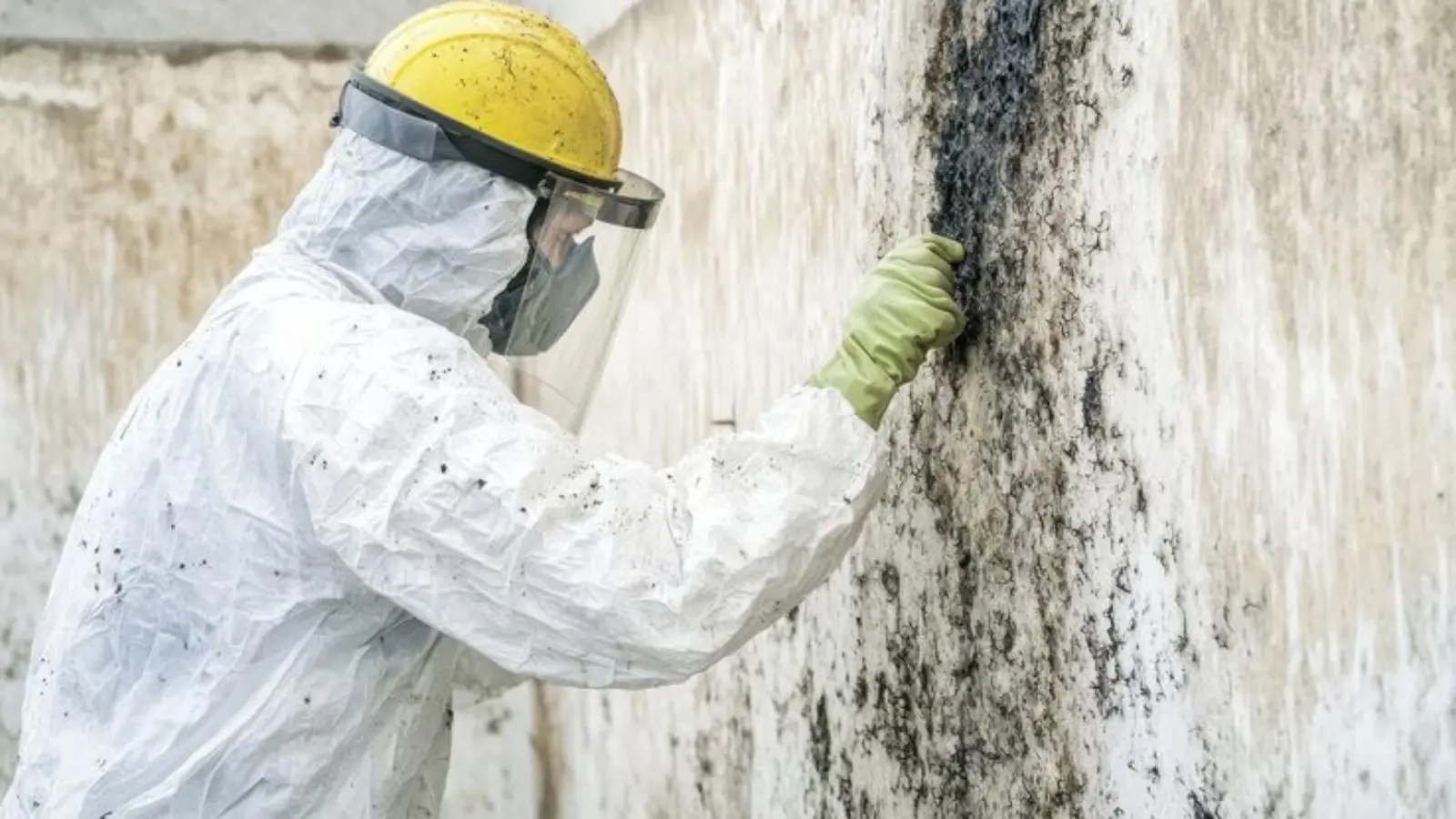
Mold remediation in Coachella is two jobs in one order: fix the moisture, then remove what has grown. Mold needs moisture to grow, so a leaking toilet supply line, a clogged air conditioner condensate line, a dripping evaporative cooler or a roof that let in storm water has to be dealt with first. After that, crews contain the area and remove affected materials following the ANSI/IICRC S520 mold remediation standard.
This page covers planned mold work. If water is still spreading, call about emergency water removal first, and for the drying step that prevents mold, see water mitigation.
Dark spots in a closet, a musty smell or a ceiling stain? That points to mold remediation
People rarely search for mold remediation by name. They describe fuzzy spots on a closet wall, a corner of the shower ceiling that keeps darkening, carpet that smells off after a leak, or a stain under a sink cabinet. Those are the situations where inspection and remediation are the right next step. A technician can find the moisture behind it and tell you what needs to come out.
Why mold shows up in a dry desert city
Coachella averages roughly five inches of rain a year, so homeowners assume mold is not a local problem. It is, because mold follows leaks, not weather. Air conditioners run for months, and a blocked condensate line can drip into a ceiling or a closet for weeks without anyone noticing.
Evaporative coolers and flat roofs matter too. A local roofer told KESQ after remnants of Tropical Storm Rachel in October 2026 that swamp coolers dripping onto roofs, ponded flat roofs and clogged drains were common leak causes. A leak that soaks insulation in a ceiling can feed growth in the closet below, so look for the stain and then inspect the wall under it.
Many Coachella homes were built since 2000 and sit on slabs, so mold calls tend to involve closets, bathrooms, wall bottoms and attics rather than basements. Apartment and rental households, about 38 percent of occupied homes, should report a leak in writing to the landlord and keep dated photos before anyone cleans or removes anything.
Signs worth getting inspected
- A musty smell that is stronger in one closet, bathroom or cabinet
- Discoloration or fuzzy spots on drywall, caulk, baseboards or the ceiling edge
- Bubbling or peeling paint near a plumbing wall or window
- Carpet or pad that stays damp or smells off after a past leak
- A ceiling stain that returns after repainting
None of these confirms mold on its own, and a stain can have other causes. An inspection looks for the moisture source and the extent of growth before anything is removed.
How mold remediation works, step by step
Inspect and find moisture
Moisture meters and a thermal imaging camera locate the wet source and the area affected.
Contain the area
Plastic barriers and negative air keep disturbed particles from spreading through the house.
Remove and clean
Affected porous materials are cut out, and remaining surfaces are HEPA vacuumed and cleaned.
Dry and verify
The area is dried to a normal level and checked before rebuilding starts.
HEPA air scrubbers run during removal so airborne dust is filtered, and removed materials are bagged before they leave the containment. Rebuilding, such as new drywall and paint, is a separate repair phase and may need permits from the City of Coachella Building Division, so ask your contractor.
Mold removal and black mold cleanup
Color does not tell you what kind of mold you have, and black spots are not automatically a special case. What matters is how much material is affected, what it is growing on and whether moisture is still present. Small areas of surface growth on hard, nonporous materials can be cleaned. Growth in porous materials such as drywall, insulation and carpet is usually removed, because the roots go into the material.
Whole-room bleach spraying is not remediation. It can leave moisture behind and does not take out the affected material. If you plan to do small cleanup yourself, keep it to a small, dry, hard surface, and stop if you find more than expected behind it. Questions about health belong with a physician.
For anything beyond a small spot, we set up containment first so cleaning does not spread growth to clean rooms.
Mold after water damage
Water that is not dried promptly gives mold the moisture it needs. After a leak, flood or roof failure, drywall, insulation, carpet and wood framing can stay damp inside walls and under flooring even when the surface looks fine. That is why drying the structure properly through water mitigation is the best way to avoid a mold job later.
If water sat for days before anyone dried it, or an old stain keeps returning, an inspection checks the cavity. If a storm like Rachel in autumn 2026 soaked a ceiling and the repair was only cosmetic, the wet insulation can still be there. We will tell you what the readings show and what needs to come out.
Mold testing and inspection
An inspection starts with moisture meters and a thermal imaging camera, because finding the water source matters more than any single sample. Air or surface testing can document conditions, and it is most useful before and after remediation. Test results do not replace fixing the leak.
Independent clearance testing is done by a third-party tester who does not do the remediation, which keeps the verification separate from the work. Many buyers, sellers and lenders ask for this documentation, and each decides what it will accept, so ask them first. We cannot promise that any lender will accept a particular report.
If you are not sure whether a spot is mold, an inspection will tell you what is likely growing there and where the moisture is coming from.
What affects the scope and price of mold remediation
| Factor | Why it changes the job |
|---|---|
| Moisture source | A leak must be repaired first, and a plumbing repair is a separate trade. |
| Area and materials affected | More square footage and more porous materials mean more removal. |
| Containment and air filtration | Larger or hard-to-seal areas need more barriers and filtration. |
| Drying days and equipment | Wet framing or subfloor needs drying before rebuild. |
| Rebuild scope | Drywall, insulation, trim and paint are replaced afterward. |
Mold coverage varies by policy. Many policies cover mold only when it results from a covered water loss, while mold from long-term moisture or neglect may be excluded. The California Department of Insurance notes that homeowners policies typically exclude flood, so mold that follows flooding may fall under flood-related exclusions. Check your policy or ask your insurer.
Want your real number? Call and describe the area, and we will explain the scope and price before any work starts.
☎ Call (760) 769-1159Surface cleaning or full remediation?
| What you see | Likely approach |
|---|---|
| A small spot on tile, glass or sealed hard surface, no recent leak | Careful cleaning, then watch the area |
| Spots on drywall or ceiling after a leak | Inspection, then removal of affected material under containment |
| Smell with no visible growth, or a wet cavity | Inspection with moisture mapping before any work |
| Growth in several rooms, or after a flood | Remediation with containment, with flood damage restoration if floodwater was involved |
We serve ZIP 92236 across Coachella and work in nearby Thermal. Ask whether your state licenses mold work, and ask any company, including us, to put the scope and standard it follows in writing.
Safety Checklist Before You Disturb Suspected Mold
- Fix or shut off the water source first, because mold needs moisture to keep growing.
- Do not brush, sand or blow a fan across the area, which can spread spores through the home.
- Keep the room closed and photograph it instead of cleaning it.
- If you must enter, wear gloves and a fitted mask and wash up afterward.
- Bring health questions to a physician, not to a restoration company.
Mold Remediation Questions
Is the dark spot on my ceiling or closet wall mold?
It might be, but color alone cannot tell you. Stains can come from dust, soot, water or growth. An inspection looks at moisture readings and the material itself, and finds the source, which is what actually decides the plan.
Can I just clean it with bleach?
For a very small spot on a hard, sealed surface, careful cleaning may be enough. For drywall, insulation or anything wet inside the wall, surface spraying does not remove the affected material and can leave moisture behind. If you are unsure, get an inspection first.
Does mold testing come before removal?
Not always. Finding and stopping the moisture comes first. Testing can document conditions before and after work, and independent clearance testing is separate from remediation.
Can I get mold clearance for a home sale or loan?
Independent clearance testing is available through third-party testers, and many buyers, sellers and lenders ask for it. They decide what they accept, so confirm with them before work starts. We cannot promise any lender will accept a specific report.
Does insurance cover mold remediation?
It depends on the policy and the cause. Coverage is often tied to a covered water loss, and long-term moisture or neglect may be excluded. Flood-related damage usually needs separate flood coverage. Check your policy or ask your insurer.
Does your state license mold work?
Rules differ by state and by type of work, so ask whether your state licenses mold work and what it requires. Ask any company you consider, including us, to put the scope and the standard it follows in writing.
Is mold remediation an emergency?
Mold remediation is usually planned, but the moisture source may not be. If water is still leaking, stop the source and call the 24/7 line. For questions about mold and your health, talk to a physician.
Questions about a spot, a smell or a stain? Call and describe it.
☎ Call (760) 769-1159