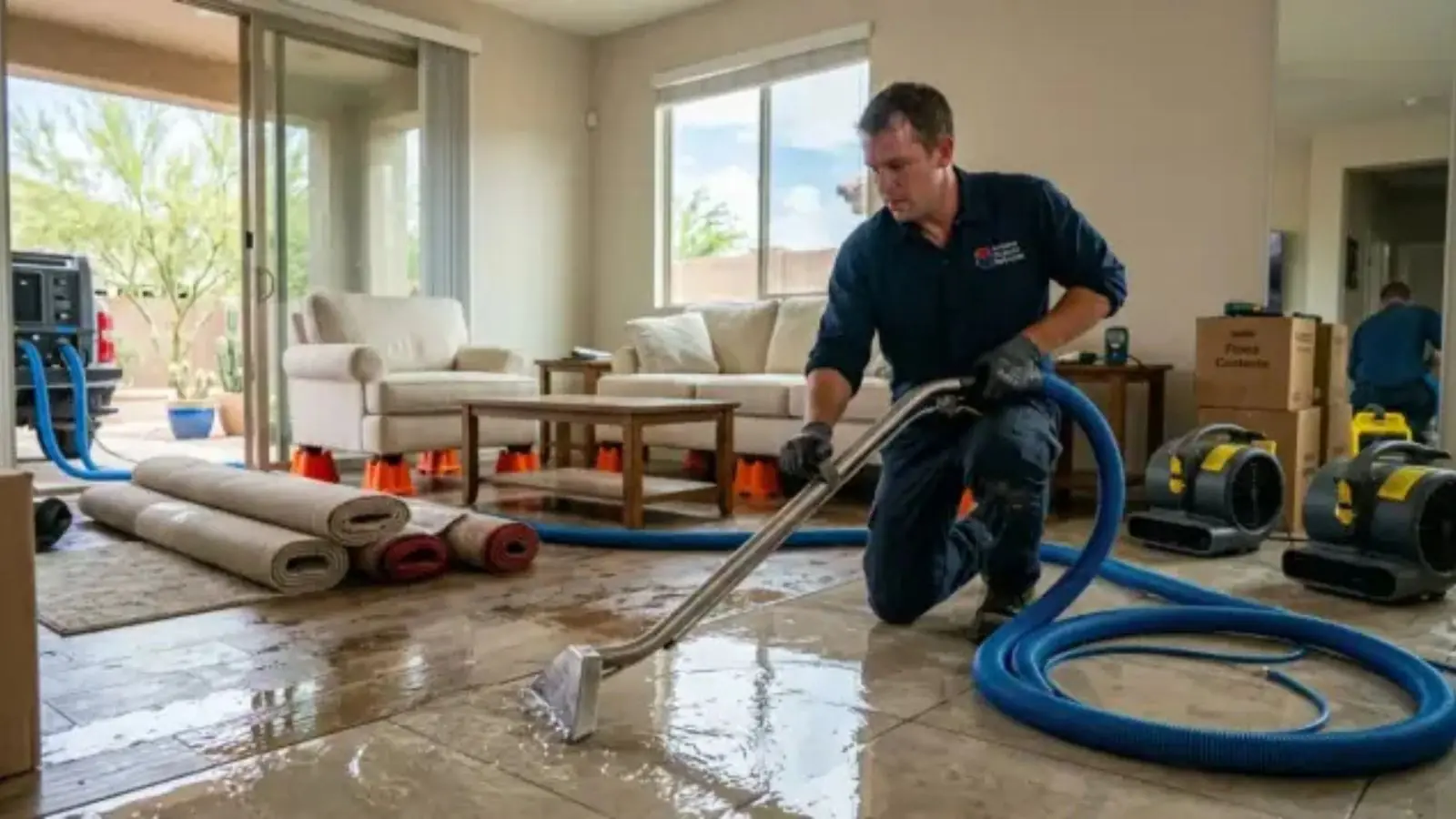
A pipe has split, a water heater has let go, or water is moving across the kitchen floor, and every minute it sits makes the damage bigger. Emergency water removal means pumps and extraction units on site to pull the standing water out, and the 24/7 line is staffed for exactly this call.
Before the crew arrives, close the main water valve, switch off power to wet areas only if you can do it safely, and lift rugs and valuables off the floor.
This is the first-response page. Once the water is out, wet framing and floors still need controlled drying through water mitigation, and larger storm or sewage events fall under flood damage restoration.
When Standing Water Is an Emergency
If water is deeper than a puddle, moving from room to room or soaking into carpet and walls, call right away instead of waiting for it to dry. Evening and weekend calls are common, because supply lines, washer hoses and ice maker lines fail without warning.
- A split supply line under a sink or inside a wall
- A water heater tank leaking onto the floor
- A washing machine hose or valve that broke while running
- A toilet or tub that overflowed and ran unnoticed
- A refrigerator or dishwasher line leaking across the kitchen
- A broken irrigation line sending water toward the house
Electricity and water do not mix
If water is near outlets, power strips or the electrical panel, do not step into it. Turn off the breaker only if you can reach the panel over a dry floor. Otherwise call the electric utility or 911 first, then call us.
Burst Pipe Water Damage: Stop the Source, Then Pull the Water
The first job is the shut-off, not the cleanup. Find the main water valve, usually near the meter or where the line enters the house, and turn it fully off, then open a faucet at the lowest point to drain the line. If the valve will not turn, the City of Coachella lists a water standby line on its Utilities Department page for main breaks. The office is closed on Fridays, so that standby number matters on a Friday call.
Freezing is uncommon in Coachella but not unknown, since the record low is 19 degrees, so exposed lines and hose bibs can split on a cold night. Worn fittings and high water pressure are other common causes.
With the source stopped, crews extract water with submersible pumps or portable extraction units, check wall cavities with moisture meters and decide what must come out. A plumber repairs the pipe, and the order of work is planned so the plumber is not working around wet drywall.
Whole-House Flooding and Water in the Crawl Space
Calls that begin with water everywhere in the house are handled by zones. The crew pulls standing water from the lowest rooms first, then works outward so water is not pushed into dry areas.
Most homes here are slab-on-grade, though some raised foundations have crawl spaces. A broken irrigation line can fill a crawl space with no sign inside the house, and pumping it out is only the first step. The wet soil, insulation and subfloor above keep releasing moisture, so a technician checks them with a moisture meter before the job closes.
How Water Extraction Works
Dispatch
The dispatcher asks where the water started, how deep it is and whether the source is off, so the right pumps go on the truck.
Pump and extract
Submersible pumps clear standing water, then truck-mounted or portable extraction units pull water from carpet and low areas.
Read and decide
Moisture meters and a thermal imaging camera show where water traveled behind baseboards and under floors.
Hand off to drying
Air movers and LGR dehumidifiers go in, and the job continues as water mitigation.
Drying equipment is placed and monitored as part of the job. Fans set up without readings often leave moisture in the base of the wall, so equipment alone is not a fix.
Extraction, Drying or Cleanup: Which One Do You Need?
| Situation | First move | Where it goes next |
|---|---|---|
| Water on the floor right now | Stop the source and extract | Water mitigation for controlled drying |
| Wet walls or damp carpet with no standing water | Moisture mapping and drying | Drying until readings are normal |
| Sewage or water that came in from outside | Extract and contain | Flood damage restoration for removal and disinfecting |
| Dry now but stained, soft or warped | Confirm dry readings | Water damage repair to rebuild |
Why Water Removal Calls Rise After Storms and Hot Spells
After remnants of Tropical Storm Rachel moved through in October 2026, a local roofer described ponded water on flat roofs, gutters and drains clogged with palm and tamarisk debris, and swamp coolers dripping onto roof material. Water that gets past a weak spot lands in ceilings, light fixtures and wall cavities, where it becomes an indoor removal job.
Summer brings a different pattern. Air conditioners and evaporative coolers run for months, and a blocked condensate line or an overflowing cooler pan can soak a ceiling or a closet floor. Those leaks are slow, so check closets and ceilings near the air handler if you notice a damp smell.
Where Crews Respond
Crews reach every address in ZIP 92236 and head out to La Quinta, Indio, Thermal and Mecca as well. Same-day response is available when crews can reach you, including after hours.
Cost Factors for Emergency Water Removal
Price depends on what the water reached, and the scope and price are explained before work starts.
| Factor | Why it changes the scope |
|---|---|
| Volume and depth of water | More water means more pumping and extraction time |
| Water category | Clean, gray and contaminated water are handled differently |
| Area reached | Rooms, floors and wall cavities all add to the scope |
| Materials soaked | Carpet, pad, hardwood and drywall react differently to water |
| Drying and rebuild that follow | Extraction is the first stage of a longer job |
Sudden and accidental events such as a burst pipe are often covered by a homeowners or renters policy, while slow leaks from neglect often are not, and flood from outside is usually excluded and needs separate coverage. Check your policy or ask your insurer, and photograph the water before anything is moved.
Want your real number? Call and describe the water. The scope and how the price is set are explained before work starts.
☎ Call (760) 769-1159The published standard
ANSI/IICRC S500 is the published industry standard for water damage restoration. Standing water removal is the first stage it describes, and it ties the end of drying to measured readings, so ask any company how it will confirm the structure is dry.
Safety Checklist While Water Is Standing
- Stay out of any room where water touches outlets, cords or a panel.
- Turn off power to the area only if you can reach the breaker while standing on dry ground.
- Do not use a household vacuum on standing water.
- Lift valuables and keep children and pets out of the room.
- Call 911 or the utility for any electrical or gas risk before calling the restoration line.
Emergency Water Removal Questions
Do you handle water removal emergencies at night or on weekends in Coachella?
Yes. The line is answered 24/7, including nights, weekends and holidays, and same-day response is available when crews can reach you. Tell the dispatcher where the water started and whether the source is off.
Should I turn off the power before the water is removed?
Only if you can reach the panel without stepping through water. If you cannot, leave the area, call the electric utility or 911, and then call us.
Can I rent air movers and dehumidifiers instead of hiring a crew?
Drying equipment goes in as part of a monitored job, because placement and moisture readings decide when materials are dry. A loose fan and dehumidifier without readings often leave moisture in wall bases and subfloors.
How long does drying take after the water is removed?
Often several days, depending on the materials and how far the water traveled. Moisture meters, not the calendar, decide when the structure is dry.
Water still spreading? Call the 24/7 line and the dispatcher will talk you through the first steps.
☎ Call (760) 769-1159