Start with what you can see
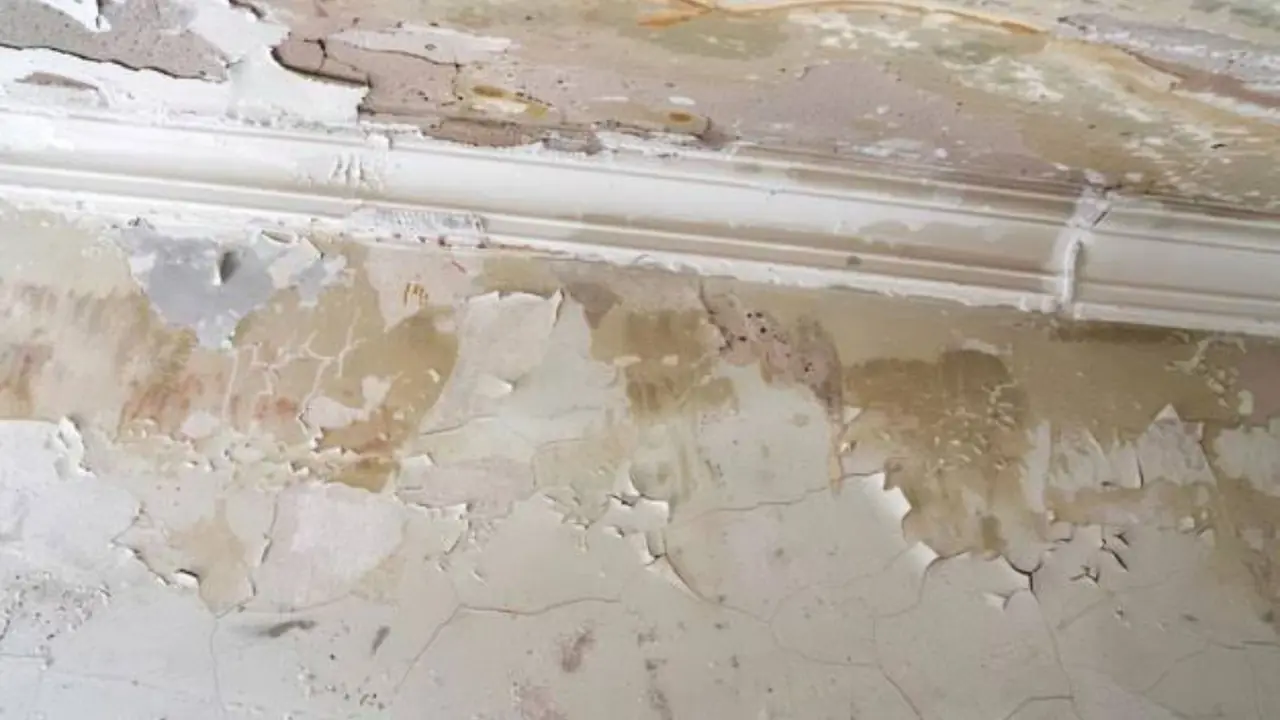
Water damaged walls announce themselves in ways you can see and feel. A tan or yellow stain, paint that bubbles or peels, a wall that feels cool and clammy, or drywall that gives when you press it with a thumb are all signs of moisture inside the wall surface. This guide is about walls you can see, so it focuses on the surface clues and the choice between drying and cutting.
Where the stain sits tells you a lot. A stain near the baseboard points to a floor-level source such as a washer hose or a plumbing fitting. A stain near the ceiling line points to the roof, an air conditioning line or a bathroom above.
Find and stop the source before anything else. A repaired wall over an active leak will fail again, and a fresh coat of paint will only hide the evidence for a short time.
What each wall symptom usually means
| What you see | What it often means | Next step |
|---|---|---|
| Brown ring or tan stain | Water has reached the paper face and dried, possibly more than once | Check for an active source, then test with a moisture meter |
| Bubbling or peeling paint | Moisture is pushing the paint film off the drywall | Do not scrape yet, probe the area and look for the source |
| Soft or crumbling drywall | The gypsum core has absorbed water and lost strength | Plan to cut out the soft section after the source is fixed |
| Swollen baseboard or loose trim | Water has wicked up from the floor | Remove the trim carefully so the wall bottom can dry |
| Musty smell with no visible stain | Moisture is trapped behind the surface | Have the wall mapped with a meter before opening it |
Dry it or cut it: how the decision gets made
Drywall can often be dried in place if the water was clean, the wall was wet for a short time and the paper face is still firm. Fast action matters, because the first day or two decides how much of the wall can stay.
Cutting becomes the better choice when the board is soft, when insulation inside the wall is soaked, or when the water was contaminated. Insulation holds water against the board and dries slowly, so it often comes out even when the drywall looks salvageable.
A common technique is a flood cut, a straight horizontal cut about a foot or two above the highest wet reading. It exposes the cavity for drying and leaves clean edges for the repair.
Our water damage repair team handles the rebuild once the wall is dry, and the earlier water mitigation stage follows the readings, not the calendar.
A quick test you can do before calling
Press a flat screwdriver tip lightly into the wet area. If it sinks in or the surface flakes, the board has lost strength. If it stays firm, drying may be enough. Treat this as a hint only, because a meter reads moisture the screwdriver cannot.
Drywall and the published standard
Whether wet drywall is dried or cut out is a judgment that ANSI/IICRC S500 frames around the water category and the readings. Clean water caught early can often be dried in place, while contaminated water usually means removal.
Coachella Local Note: repair work and the Building Division
The City of Coachella Building Division, part of the Development Services Department, handles plan check, permits and inspection for remodel and repair work, including building, electrical, plumbing and mechanical work. Its counter keeps Monday to Thursday hours and is closed on Fridays.
This matters for wall repair because cutting open a wall can expose wiring and plumbing. Replacing drywall alone is usually simple, but if the repair touches electrical or plumbing, ask the Building Division what it requires before the walls are closed up again, and plan around the Friday closure.
Drying a wall without tearing out more than you must
A crew checks the wall with moisture meters and a thermal imaging camera, then decides how to open it. Often the baseboard comes off and small holes or a narrow slot let warm, dry air move through the cavity. Air movers and dehumidifiers run until the readings settle.
Most Coachella homes were built in the last few decades, and many are slab-on-grade stucco with drywall inside. That construction dries well when it is opened properly, but stucco and tight wall cavities can trap moisture that rises from the slab edge.
Not sure whether a stain is old or active? Call dispatch and describe it. A crew can tell you what to check first.
☎ Call (760) 769-1159Repairing and repainting the right way
Once the wall reads dry, the repair is routine carpentry. Damaged board is cut back to solid material, new drywall is fitted, seams are taped and finished, and the area is primed before paint. A stain-blocking primer matters because water stains often bleed through a plain coat.
Painting too early is the common mistake. A wall that feels dry to the hand can still hold moisture, and paint over it bubbles or peels again. Wait for a meter reading that matches an unaffected wall in the same room.
Texture is the last step. Matching a stucco-style or knockdown finish takes practice, so ask for a sample patch on a hidden area if the match matters to you.
Insurance and records
If the wall damage came from a sudden pipe or appliance failure, your homeowners or renters policy may respond. Slow leaks and neglect are often excluded, and flood damage usually needs separate flood coverage. Check your policy and ask your insurer.
Photograph the stain before any work begins and keep the moisture readings. If the source was a neighbor's unit in an apartment building, tell your landlord right away and keep the date of your report.
For a wall that is spreading toward a neighboring room, Thermal and Indio callers reach the same 24/7 line, and the first question is always where the water started.
If you cannot find the source after a careful look, a leak detection visit from a plumber is the right next call. Restoration starts after the water is stopped.
Wall and drywall questions
Can I paint over a water stain on a wall?
Not until the cause is fixed and the wall reads dry. Use a stain-blocking primer first, because a plain coat of paint lets the stain bleed through and the moisture can push the new paint off.
How do I know if drywall is ruined or can be dried?
Firm board with a sound paper face can often be dried, while soft, crumbling or swollen board should be cut out. A moisture meter and a visual check give a better answer than touch alone.
Is wet insulation inside the wall a problem?
Yes. Insulation holds water against the board and dries slowly, so it is commonly removed even when the drywall looks fine. Leaving it in can keep the wall damp for weeks.
Do I need a permit to replace a section of wall in Coachella?
Simple drywall patching often does not, but permit rules vary with the scope of work. Ask the City of Coachella Building Division before you start, especially if wiring or plumbing in the wall is involved.
Wall getting worse? Call the 24/7 line and ask what to do first.
☎ Call (760) 769-1159