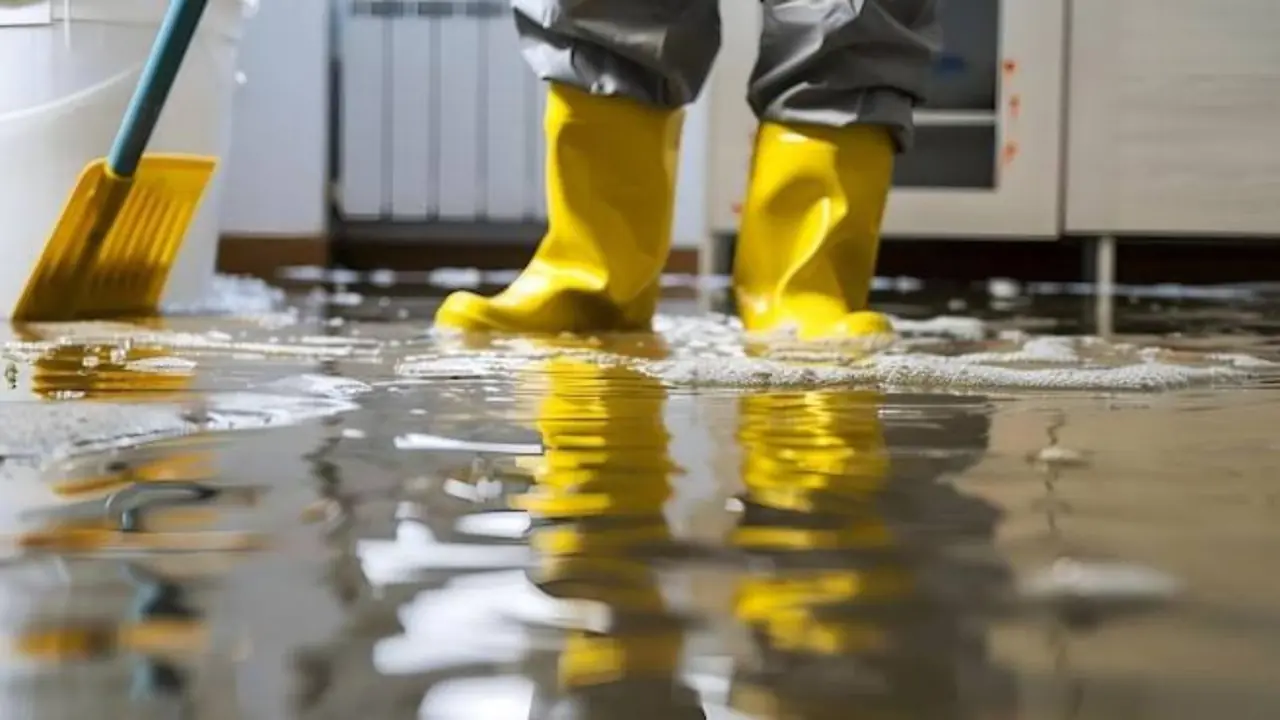
A sewage backup is an emergency, and the first hour is about staying safe, not saving carpet. Raw sewage coming up through a floor drain, a tub or a toilet should be treated as contaminated from the moment you see it.
This guide explains what to do first, how to tell whether the blockage is in your pipe or the city's, what professional cleanup involves, and how to handle a backup on a Friday or a weekend in Coachella.
Safety first: what to do in the first minutes
- Stop using water in the house. Do not flush, run the sink, start the washer or take a shower, because every drop has nowhere to go.
- Keep people and pets out of the affected area, and keep children away from the water.
- Do not walk through the water to reach an outlet or a panel. If water has reached outlets, appliances or the electrical panel, call the utility or 911 about the electrical risk before calling a restoration line.
- Do not try to flush the line with chemicals or push the water around with a mop.
- Take photos from a safe distance, then call a plumber, the sewer utility and a restoration crew.
Treat everything the water touched as contaminated, including shoes and clothing. Wash your hands well after any contact, and do not eat or drink in the area.
Is the blockage yours or the city's?
In many sewer systems the pipe from the house to the connection at the street is the owner's responsibility, while the main line in the street belongs to the utility. The clues are the pattern. If only your drains back up, the problem is often in your own line. If several homes on the street have trouble or a manhole is overflowing, the main is the likely cause.
| What you see | Likely location | First call |
|---|---|---|
| Only your lowest drain backs up | Your private line | A plumber, then restoration |
| Several neighbors affected or a manhole overflowing | The utility main | The sewer utility's overflow line, then restoration |
| Water reaching outlets or the panel | Any | The utility or 911, then restoration |
| Overflow on a Friday or weekend | Either | The utility's standby line, then restoration |
A plumber's camera inspection finds the blockage and documents where it sits, which also helps an insurance claim. Keep the report along with your photos.
What professional cleanup involves
Sewage water is classified as Category 3 under the ANSI/IICRC S500 water damage standard, which means the cleanup follows stricter practices than clean-water jobs. Crews wear protective gear, extract the water with pumps and extraction units, and set containment so contamination does not spread to clean rooms.
Porous materials that soaked up sewage, such as carpet, pad, insulation and drywall, are usually removed and discarded. Hard surfaces are cleaned and treated with antimicrobial products. Air scrubbers and dehumidifiers dry the structure, and moisture readings confirm the finish.
This is the kind of job described under flood damage restoration, and the removal and sanitizing steps are covered in more detail under water damage cleanup. Ask any company whether its crews follow the S500 standard.
Sewage coming up in the house? Call the 24/7 line now and stay out of the water.
☎ Call (760) 769-1159Insurance and records
Sewer and drain backup is often handled by a separate endorsement on a homeowners policy, so ask your insurer what yours says. Do not assume a claim will be approved. Keep photos, the plumber's report, receipts and the name of anyone you spoke with at the utility.
Outside city limits
The sewer provider may be different in unincorporated communities such as Thermal or Mecca, so check your bill or ask your county or district office who handles overflow calls. The first steps stay the same: stop the water, stay out and document.
Coachella Local Note: The City Utilities Department
The City of Coachella Utilities Department, also known as the Coachella Water Authority, provides wastewater collection and treatment for city customers. It lists a separate standby line for sewer overflows and other emergency calls on the city website, so look that number up now and save it in your phone.
The department's office is open Monday through Thursday and closed on Fridays. A backup that starts on a Friday or over a weekend is a standby-line situation, not a wait-for-the-office situation, so do not let the closed counter delay your call.
If repairs involve plumbing, ask the City of Coachella Building Division what permits apply, since it handles plumbing permits. Permit rules vary, so confirm before work begins.
Sewage Backup Questions
Can I clean up sewage myself?
Small, minor spills on hard surfaces can be handled with care, but a backup that reaches carpet, drywall or several rooms should go to professionals. Contaminated porous materials need removal, and containment keeps the problem from spreading.
Is it safe to stay in the house during cleanup?
Most restoration guidance is to keep people and pets out of the affected area until it has been cleaned and dried. Ask the crew which rooms are off limits and for how long.
How do I know if the blockage is mine or the city's?
If only your house is affected, the cause is often your own line. If neighbors have trouble or a manhole is overflowing, the main is the likely cause. A plumber's camera inspection and a call to the sewer utility confirm it.
Will my insurance cover a sewage backup?
Coverage for sewer and drain backup is often a separate endorsement. Check your policy or ask your insurer, and keep photos and the plumber's report.
Who do I call for a sewer overflow on a Friday in Coachella?
The City of Coachella Utilities Department office is closed on Fridays, but the city lists a standby line for sewer overflows on its website. Call that line for the main, then call the 24/7 restoration line for the cleanup.
Backup in the house? Call the 24/7 line and stay out of the water.
☎ Call (760) 769-1159