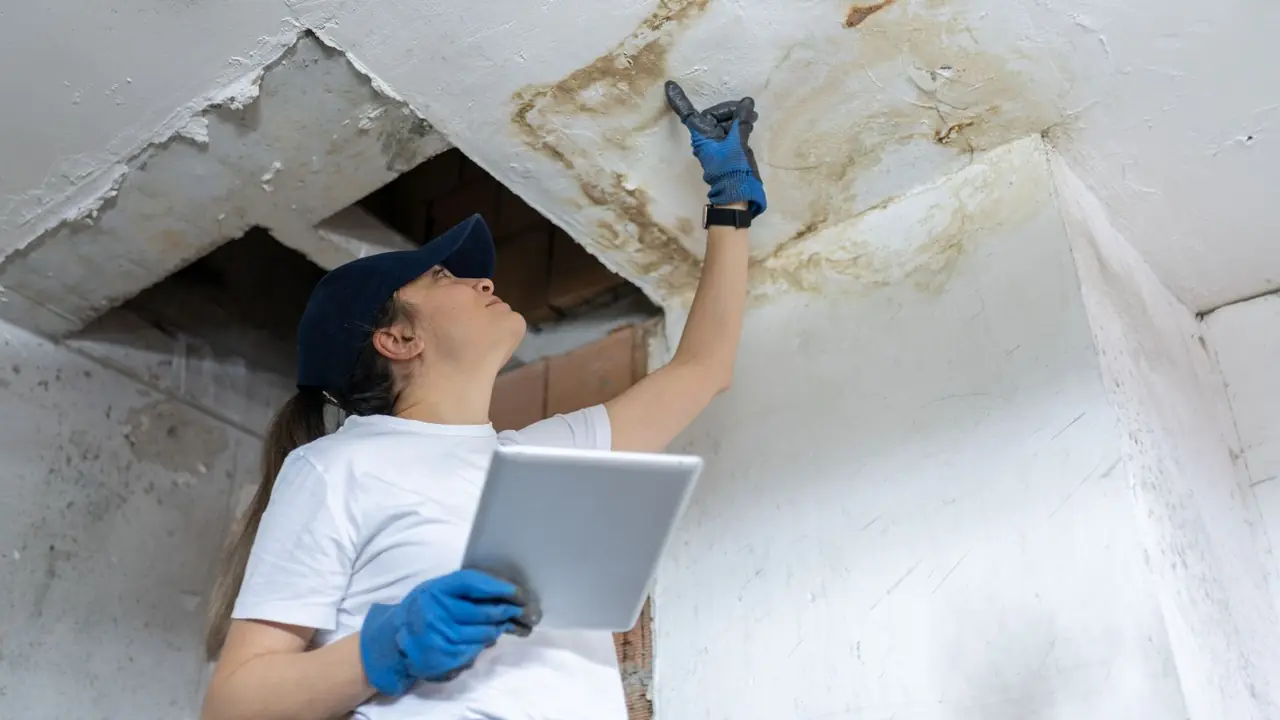
Rain is rare in the Coachella Valley, which is exactly why roofs get neglected. When a strong system arrives, every weak spot shows at once, and the first sign is often a drip in a hallway or a brown ring spreading across a ceiling.
This guide covers where rain gets into desert roofs, what to do inside the house while it is still raining, how insurers tend to separate a roof leak from flooding, and why some repairs fail early. It draws on two storms that locals still talk about.
What two big storms showed about local roofs
In August 2023, remnants of Hilary hit the desert so hard that NASA's Earth Observatory described Palm Springs as receiving six months of rain over six hours, and flooding closed roads across the valley, including I-10. In October 2026, the remnants of Tropical Storm Rachel followed, and the National Weather Service recorded 1.71 inches at Thermal, as reported by KESQ.
A local roofer told KESQ that the most urgent calls after Rachel were flat roofs with standing water, because water finds any opening, even a pinhole. Some homes that started leaking on the first night were still dripping days later because water remained on the roof. The lesson is simple: a roof that holds water is a roof that keeps leaking after the sky clears.
Where rain gets in on desert roofs
| Roof feature | How water gets in | What to look for |
|---|---|---|
| Flat or low-slope roof | Ponded water finds pinholes and seams | Standing water that lasts after the rain stops |
| Tile roof | One broken or slipped tile exposes the underlayment, which breaks down | Cracked tiles and ceiling stains in a line below |
| Drains and gutters | Palm and tamarisk debris clogs them and water pools on the underlayment | Debris in drains, overflow marks on walls |
| Cooler and vent openings | Flashing gaps, plus coolers that drip and weaken the material below | Dark streaks around the unit, soft spots |
Notice how many of these are slow problems. A cracked tile or a clogged drain sits unnoticed for years in a dry climate, then a single storm tests it. The leak you see inside is the end of a longer story outside.
What to do inside while it is still raining
- Set buckets under drips and put a tub or tarp under a bulging ceiling patch.
- Move furniture, electronics and rugs out of the wet zone.
- Photograph every stain and drip with a timestamp before you clean anything.
- Leave the breaker alone if water is near a fixture unless the panel is dry and safe to reach, and call the utility or 911 about any electrical risk.
- Stay off a wet roof. A temporary tarp is a roofer's job, not a homeowner's.
Once the rain stops, the interior still needs attention. Wet insulation and ceiling board will not dry on their own in a few hours, and the longer they stay damp the more of the ceiling you may lose.
Roof leak or flood: why the difference matters
Rain entering through a damaged roof and water rising at ground level are different events. According to the California Department of Insurance, homeowners and commercial policies typically exclude flood, mudslide and debris flow, and flood coverage comes from the National Flood Insurance Program or a private flood policy.
A National Flood Insurance Program policy generally takes effect 30 days after purchase, so buying one when a storm is already forecast is too late. If ground-level water or mud entered your home, that is the work described under flood damage restoration. If rain came through the roof, drying and rebuilding the interior follows the path described under water damage repair.
A roof leak is often handled differently from a flood claim, but your policy language decides. Read it, photograph everything, ask your insurer how your loss is classified and keep receipts for emergency steps. Never assume a claim will be approved.
Ceiling stained or dripping after a storm? Dispatch answers at any hour.
☎ Call (760) 769-1159Why some post-storm repairs fail early
The KESQ roofer said some repairs made after Hilary were failing early, which he blamed on incorrect first repairs. A patch that covers a stain without finding the entry point only moves the problem down the roof.
Ask the roofer where the water entered and ask for photos of the repair. Have the ceiling below checked with a moisture meter before it is repainted, because paint over a damp board traps moisture and invites staining to return.
He also advised an inspection once a year, or twice a year for homes near trees, hillsides or sand dunes. Schedule it ahead of the next storm season rather than after the next leak.
Coachella Local Note: Storms, Slabs and Flat Roofs
Coachella averages about 4.97 inches of rain a year, so a single storm can deliver a meaningful share of a normal year in one night. Roofs designed around a dry climate are not built to sit under water for days, which is why ponding matters so much here.
You can look up how flood risk is mapped for your address on the FEMA Flood Map Service Center, and you can ask the City of Coachella Building Division about roofing permits, since it handles them. Its office hours run Monday through Thursday, and it is closed on Fridays.
Storm effects differ across the valley. North Shore streets near Mecca were left buried in mud after Rachel, according to KESQ, while homes in La Quinta sit against the Santa Rosa Mountains on three sides, which is why mountain runoff is part of the picture there.
Roof Leak Questions
How soon should a roof leak be dried out inside the house?
As soon as the source is controlled. Wet insulation and ceiling board begin to break down within a couple of days, so a moisture check and drying plan should start quickly rather than after the roof is repaired.
Will homeowners insurance cover a roof leak from heavy rain?
It depends on your policy and the cause. Sudden damage is often treated differently from flood, which most homeowners policies exclude, so ask your insurer how your loss is classified.
Can I wait for the roof to dry before calling a restoration company?
Waiting is risky. Water trapped in insulation does not dry just because the sky cleared, and a restoration crew can start drying the interior while a roofer handles the roof.
What is the difference between roof water and storm mud?
Roof water is usually clean when it enters, while mud and ground-level flood water carry soil and debris and need heavier cleaning. Tell the crew exactly where the water came from.
Do Coachella roofs need inspection if it rarely rains here?
Yes, because rare rain is hard on neglected roofs. With only about 4.97 inches of rain a year, small defects go unseen until a storm, and the roofer quoted by KESQ recommended an annual inspection.
Storm water inside the house? The 24/7 line is open now.
☎ Call (760) 769-1159