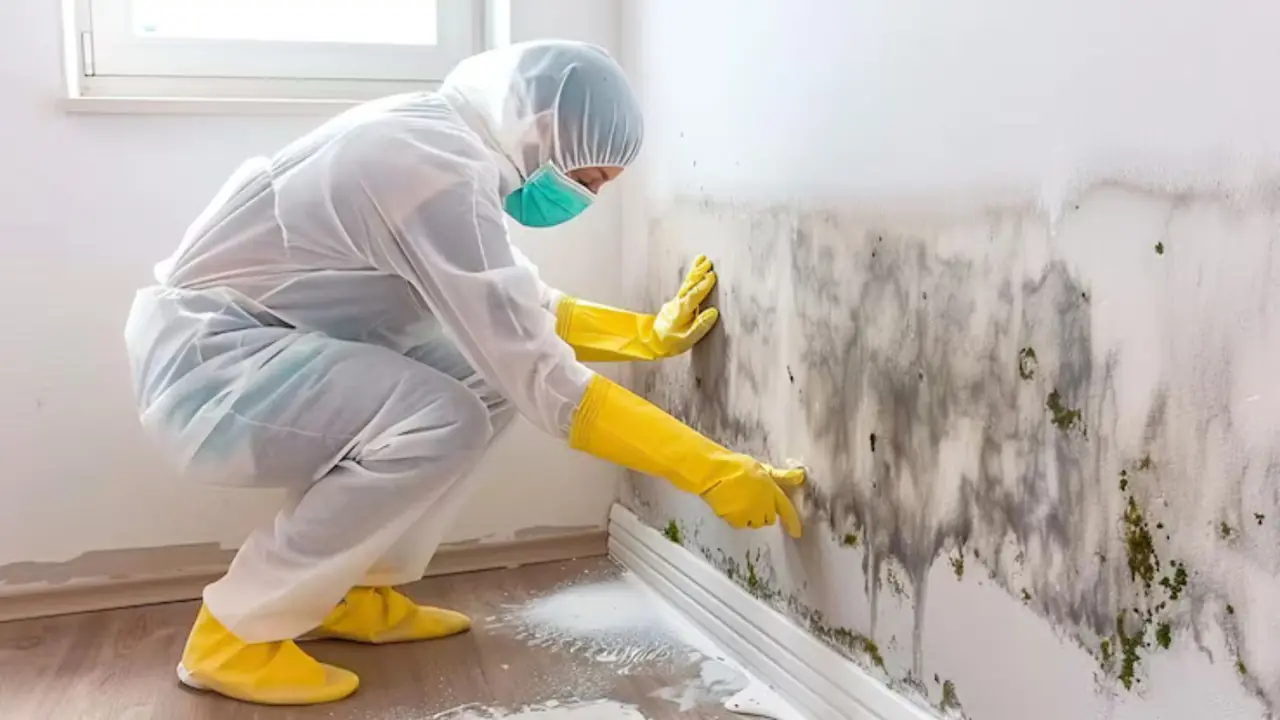
Mold on a wall always has a water story
Mold on a wall is a sign that moisture has been present, often for longer than anyone noticed. Mold needs water to grow, so a wall that is truly dry does not grow it. Before you pick up a scrub brush, the first question is where the moisture came from.
In a desert city that sounds odd, but it holds true here too. The usual sources in Coachella homes are plumbing leaks, air conditioning condensation, roof leaks after a storm and the damp corner of a bathroom or closet. Each one leaves a pattern on the wall.
Cleaning the surface without fixing the source gives a short win. The spots return because the wall keeps getting wet.
When surface cleaning is reasonable
A small patch of mold on a hard, nonporous surface, such as sealed tile or a painted wall that dries fast, can sometimes be cleaned by a homeowner. The patch should be small, the source should already be fixed and the area should be well ventilated.
Wear gloves and eye protection, avoid stirring up dust and bag the cleaning waste. Do not mix cleaning products, and keep your hands off anything you are unsure about. People with health questions about mold should ask a physician, not a cleaning label.
If the spot returns within a short time, stop cleaning and look for moisture you missed. A returning patch is the wall telling you the source is still active.
When cleaning is not enough
Drywall is porous. Once mold grows into the paper face or the gypsum core, scrubbing the paint does not reach it. Insulation, carpet edges and baseboards behave the same way.
- The affected area is larger than a small patch or has spread across more than one wall.
- The drywall is soft, stained from the inside or has a musty odor even after cleaning.
- The growth appeared after a leak, a storm or a plumbing failure that soaked the wall.
- Mold shows up on both sides of a wall or around a window, door or ceiling line.
- A buyer, lender or landlord has asked for documented removal.
In those cases the safer path is a contained remediation. Our mold remediation service follows the published ANSI/IICRC S520 standard for mold remediation, and you can ask any company whether its crews work to it.
What a contained remediation looks like
| Question | Surface clean | Contained remediation |
|---|---|---|
| Typical target | Small patch on a hard, sealed surface | Porous material, larger areas or growth inside a wall |
| Source of moisture | Already fixed and confirmed dry | Found, stopped and documented first |
| Containment | Basic ventilation and bagging | Plastic barriers, negative air and HEPA air scrubbers |
| Materials | Cleaned in place | Affected drywall and insulation removed and bagged |
| Proof of result | Visual check | Moisture readings and, if wanted, independent clearance testing |
Containment keeps dust and spores from moving into clean rooms. Crews seal the work area with plastic, run air scrubbers with HEPA filters and often keep the area under negative pressure so air flows into the work zone, not out of it.
Affected drywall is cut back past the visible edge, bagged in the work area and carried out. Remaining framing is cleaned and dried, and the room is not rebuilt until moisture readings show the structure is dry.
Coachella Local Note: a dry climate, a leak-driven problem
Coachella sits in a hot arid climate and receives about 4.97 inches of precipitation a year, spread over roughly 14 days. The air outdoors is dry most of the time, so mold on an interior wall almost always traces to a local water source, not to weather alone.
That changes where to look. After a storm like the remnants of Tropical Storm Rachel in October 2026, local roofers reported ponded water on flat roofs and leaks that kept dripping for days. If a wall near a roof line or an upper ceiling corner shows a stain a week after rain, check it before it turns into growth.
Seeing spots on a wall and not sure why? Call dispatch and describe where and how large.
☎ Call (760) 769-1159Testing: what it can and cannot tell you
Air or surface testing can show whether mold is present and in what amount, but it does not tell you where the water came from. Moisture mapping does that, and it comes first.
Independent clearance testing, done by a separate tester after remediation, is the usual way to document that a job met its goal. It matters when a lender or buyer is waiting on proof. Ask whether your state licenses mold work and whether the tester is independent of the remediation company.
Fix the water, then the wall
A water mitigation visit dries the building materials and tells you whether the structure has returned to normal moisture levels. Once the wall reads dry and the work is cleared, it is safe to rebuild and repaint.
Use a mold-resistant board in bathrooms and near leak-prone fixtures when you rebuild, and keep the air conditioning condensate line clear. Small habits like running the bathroom fan after a shower reduce the chance of a repeat.
No honest company can promise what a wall will do years from now, because that depends on whether moisture returns. What a good remediation gives you is a dry, cleaned structure and the records to show it.
If the stain is in a rental, send the landlord a dated photo the same day. For homes farther out, Mecca and Thermal addresses are covered by the same 24/7 line.
Mold on walls questions
Can I just bleach mold off a wall?
Bleach and similar products often lighten the surface without reaching mold that grew into porous drywall, and they add moisture. The durable fix is to remove the water source and, for porous material, remove or clean past the affected area.
How do I know whether the wall mold is from a leak?
Look for a stain, a damp feel, bubbling paint or a source nearby such as a sink, a toilet, an air conditioning line or a roof edge. A moisture meter confirms it. Mold in a dry climate almost always has a local water source.
Does mold removal need a permit or license in California?
Rules vary, so ask whether your state licenses mold work and ask the contractor to explain what applies to your job. Do not rely on a company's word alone, and ask for the scope in writing.
Is mold on a Coachella wall more likely after a storm?
It can be, if a roof or window leaked during the rain. In October 2026 local roofers reported flat roofs holding water after Tropical Storm Rachel, so a ceiling stain after that kind of storm deserves a close look soon, not months later.
Mold on a wall and a deadline coming up? Call and ask how a scope is built.
☎ Call (760) 769-1159